Naeemur Rehman says no need of new provinces if Karachi population counted in full
Jamaat-e-Islami has presented 3-year performance report of its 9 towns, in a ceremony held at a local hotel with Ameer JI Pakistan Hafiz Naeem-ur-Rehman as chief guest

KARACHI, Nov 5: Jamaat-e-Islami has presented 3-year performance report of its 9 towns, in a ceremony held at a local hotel with Ameer JI Pakistan Hafiz Naeem-ur-Rehman as chief guest, performance report presented before representatives of print and electronic media.
It was revealed that despite zero development fund from PPP's provincial government, the JI's 9 towns from their own resources in 3 years restored 234 parks, revived 42 playgrounds, rebuilt 73 schools and improved their condition, made 19 dispensaries functional, constructed 10.56 million square feet roads, installed more than 150,000 streetlights and supplied drinking water to about 130,000 households, over 1 billion of rupees were spent for sewerage and water though this work does not fall under towns' responsibility. It was vowed that 2027 will prove to be even better year of construction and development in 9 towns of Jamaat-e-Islami.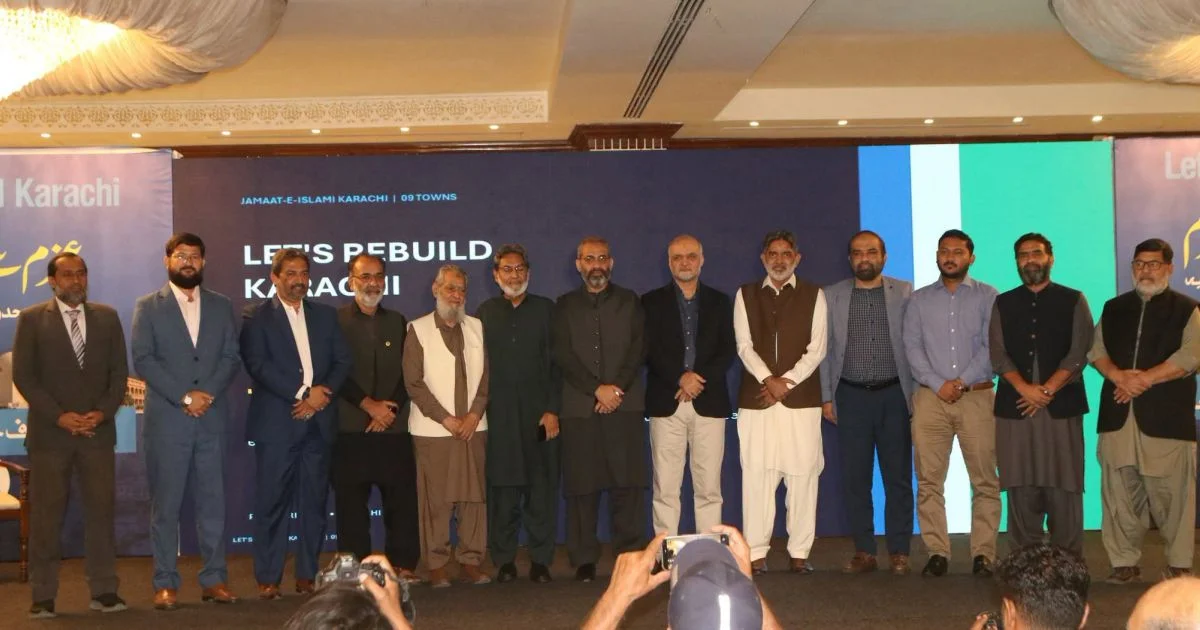
According to the report, JI-led town administrations also cleared Rs 1.25 billion in outstanding liabilities owed to town municipal employees.
Speaking on the occasion, Engr Hafiz Naeem-ur-Rehman asserted that the model governance demonstrated by JI local bodies proves that structural administrative empowerment is key to solving the metropolis's chronic issues.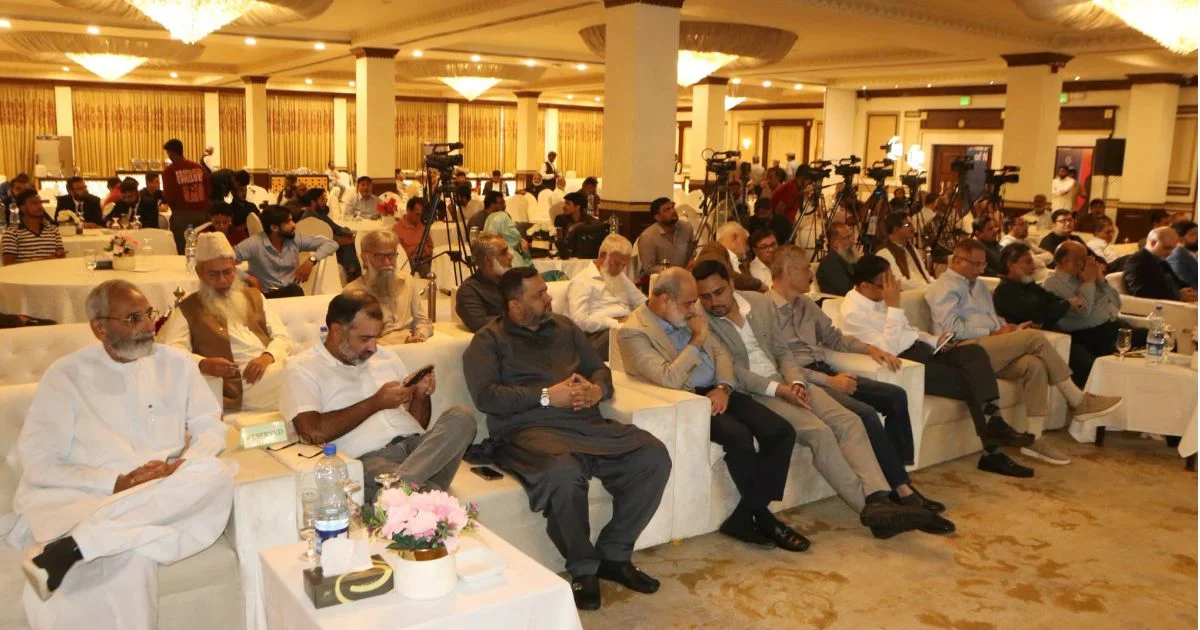
Reiterating his critique of the country's political and administrative setup, Hafiz Naeem contended that Karachi’s true population exceeds 35 million and has been systematically undercounted to deny the city its legitimate political weight. He argued that if properly counted, the Chief Minister of Sindh would naturally be elected from the urban electorate, urging Karachiites not to let themselves be divided along ethnic lines. He emphasized that Karachi belongs equally to Pashtuns, Sindhis, and Seraikis alongside Muhajirs.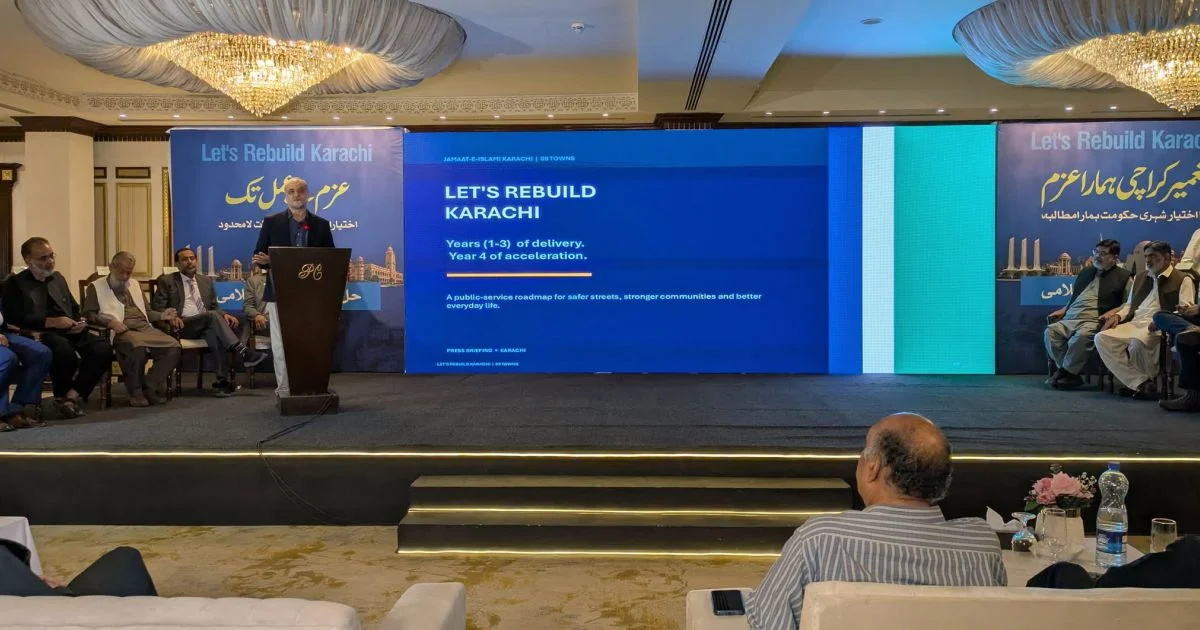
Turning his critique toward provincial financial allocation, Hafiz Naeem questioned where the Rs 3,360 billion provincial development budget allocated over the past 15 years had actually been spent, noting that Karachi received only a fraction of its fair share. He further highlighted that the city's share in the Octroi Zila Tax (OZT) was drastically slashed from 76 percent to 18 percent under PPP rule without any public accountability.
Highlighting electoral manipulation through gerrymandering, the JI leader pointed out that Union Committees won by JI represent an average population of 45,000 residents compared to just 15,000 in those held by the PPP. He accused both the PPP and MQM-P of being forcibly imposed on the city despite widespread public rejection, adding that the mandate of Karachi's citizens was trampled during the local body elections to occupy towns and snatch the mayoral mandate.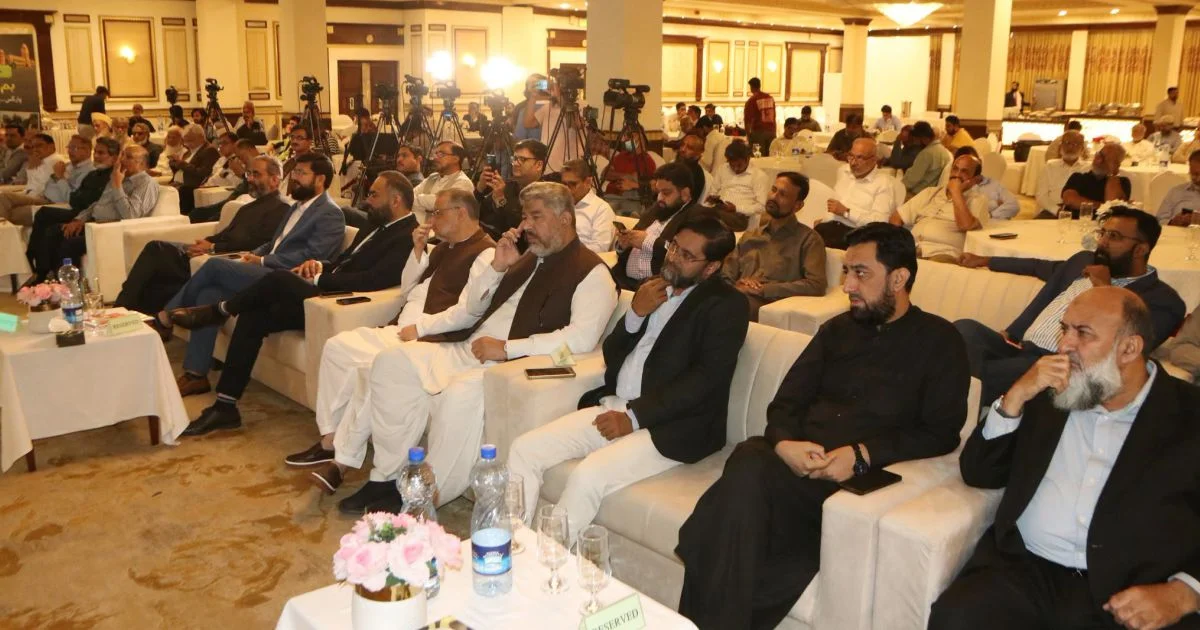
Addressing institutional stagnation and stalled mega-projects, Hafiz Naeem condemned the severe mismanagement crippling the city's core infrastructure. The K-IV water supply project, initiated during the tenure of former mayor Niamatullah Khan, saw its cost spiral from Rs 25 billion to Rs 172 billion due to chronic delays, with its capacity reduced and no completion in sight over the next three years. Similarly, the Green Line mass transit project remains incomplete, the Red Line construction has caused continuous public misery due to design flaws, and the Karachi Circular Railway (KCR) remains non-functional despite nearly a dozen ceremonial inaugurations over the years.
Critiquing civil and military bureaucracy, Hafiz Naeem noted that while past leadership pledged to dismantle corrupt systems, those very mechanisms were ultimately expanded all the way to Islamabad. He demanded that those responsible for introducing political dysfunction into Karachi take immediate ownership to fix it, warning that criticizing the status quo without actively dismantling it amounts to tacit collusion.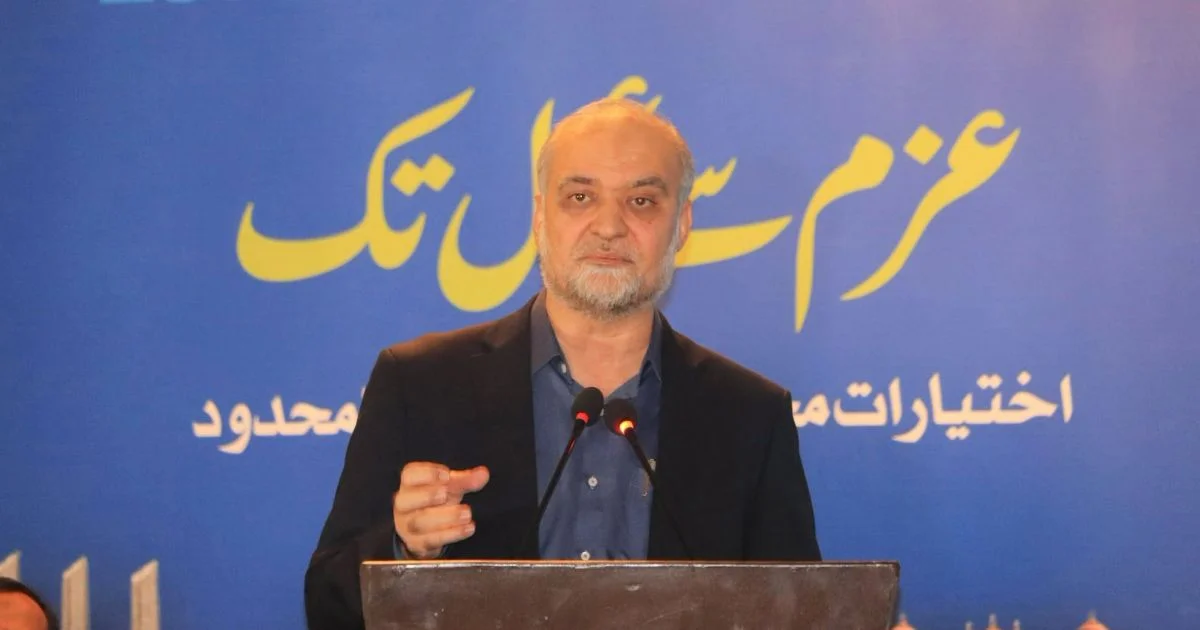
Concluding his address, the JI leader noted that global standards of local governance integrate policing and primary education under municipal authority, whereas local bodies in Pakistan remain stripped of power and at the mercy of provincial administrations. He declared that 35 million residents of Karachi cannot be thrown into the sea, nor can all youth leave the country, calling on citizens to actively struggle, defend their mandate, and look toward 2027 as an even greater benchmark year for JI's local development model.
Karachi chief Monem Zafar noted that in the education sector, the successful rollout of the Taleem Card initiative in Gulberg Town—valued at Rs 10,000 per card—will now be expanded to benefit 50,000 children across all nine towns. The party has also announced 2,000 university scholarships and 10 new buses to the University of Karachi to assist students facing severe transport shortages.