Muslim Ummah’s Future Lies in Knowledge, Character and Unity: Hafiz Naeem ur Rehman
JI Emir was addressing a reception hosted in his honour by Turkish parliamentarians in Istanbul

ISTANBUL, Oct 31: Jamaat-e-Islami Pakistan Emir Hafiz Naeem ur Rehman has said the future of the Muslim Ummah will be shaped by people who reject despair, fear and division and instead pursue knowledge, character, self-confidence and practical action.
He was addressing a reception hosted in his honour by Turkish parliamentarians in Istanbul. Former Turkish minister Dr Yasin Aktay, Turkish parliamentarians Hasan Turan and Mehmet Eshun, ruling AK Party leader Osman Nuri and Human Vakfi head Mehmet Guney also addressed the gathering.
Rehman said Istanbul symbolised Muslim history, the Ottoman legacy and the historic connection between Asia and Europe. Its mosques, religious schools, libraries and welfare institutions reflected the integration of faith, knowledge, justice and public service.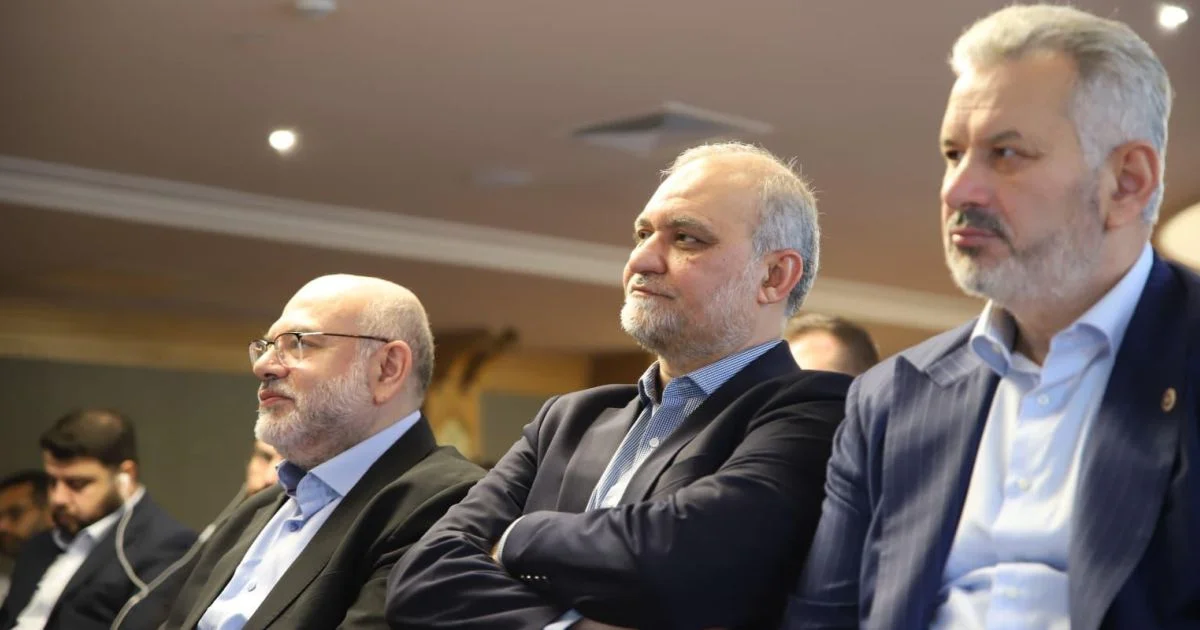
He said the decline of civilisations began not merely with the loss of territory but with the loss of purpose. The Muslim world needed to learn from history and address internal weaknesses, intellectual stagnation, political divisions, economic dependence and external pressures.
The JI emir said humanity was facing multiple crises, including economic inequality, mounting debt, environmental destruction, wars, discriminatory application of international law, ethical challenges posed by technology and a growing disconnect from the purpose of life.
He identified the leadership crisis as one of the fundamental problems, saying the world needed principled, honest and service-oriented leadership more than additional power and resources. Corruption, nepotism, rulers' detachment from the public and the replacement of consultation with fear were weakening societies.
Referring to Palestine, Hafiz Naeem described Gaza as a test of the world's conscience, saying its destruction, forced displacement, starvation and collective punishment had exposed serious contradictions in the international system's claims of justice and human rights.
He said the steadfastness of doctors, teachers, journalists, parents and children in Gaza, despite extreme suffering, offered a remarkable example of human dignity, solidarity and hope.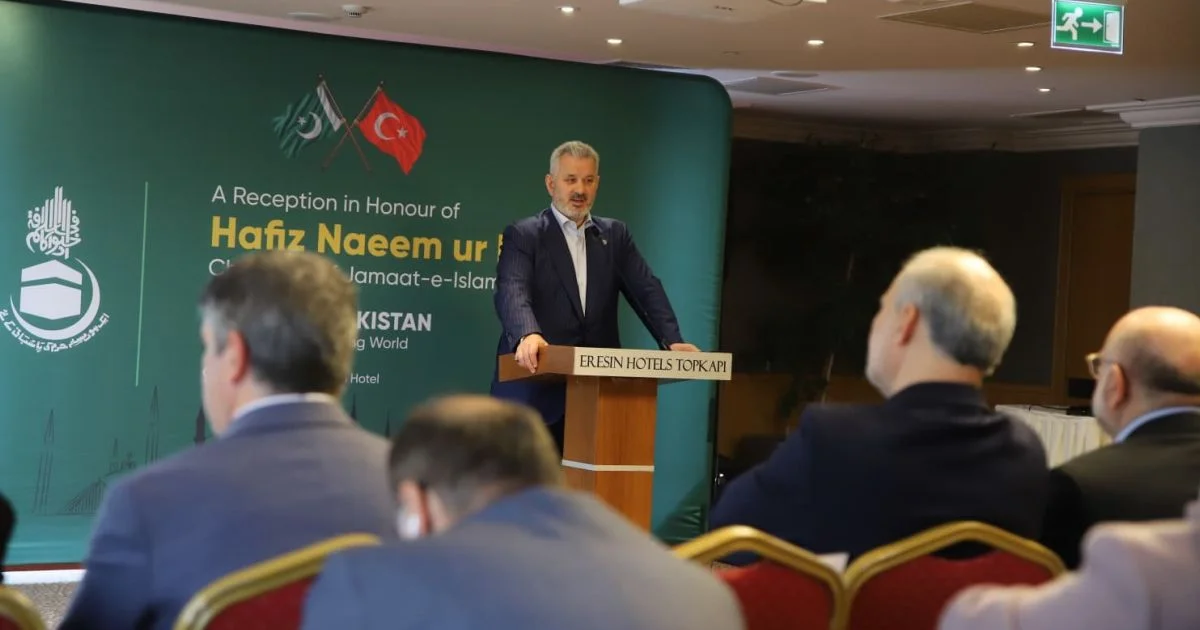
The JI emir stressed that Muslims should not limit their identity to a sense of victimhood. While confronting colonial oppression, occupation, Islamophobia and injustice, they must also present practical alternatives and solutions based on justice, equality, compassion, respect and human dignity.
He said every human being deserved respect and protection regardless of religion or identity, adding that the Muslim Ummah had a responsibility to demonstrate a balanced society founded on monotheism, justice, mercy, responsibility and human brotherhood.
Highlighting the challenges facing Muslim countries, Rehman listed political divisions, economic and technological dependence, educational and intellectual weaknesses, family-related problems, directionless youth, discrimination and the Palestine issue among their common concerns.
Addressing young people, he said education should not be pursued merely to obtain degrees and secure employment but should serve humanity. Modern skills, scientific research and professional expertise must be combined with Islamic ethics and moral values.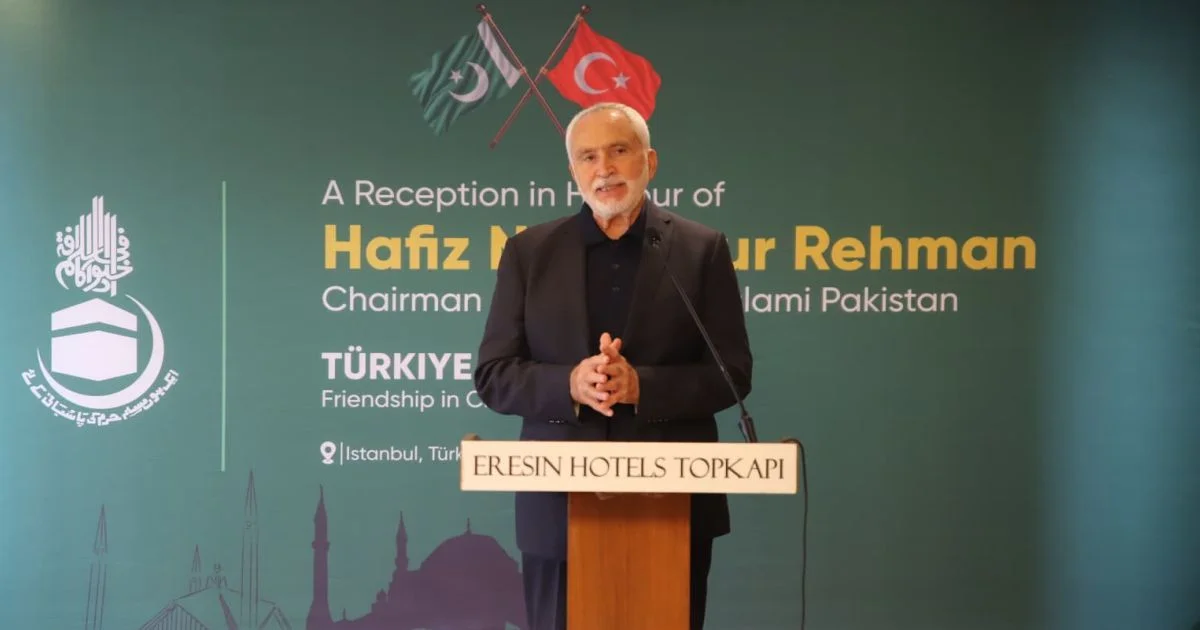
He urged young people to uphold honesty, integrity, justice, humility, courage and discipline, stressing that differences of sect, nationality, language and social class should not stand in the way of collective efforts.
He said serving society was a practical religious responsibility, including feeding the hungry, supporting orphans, educating children, helping patients, protecting workers' rights, preserving the environment and standing with the oppressed.
Hafiz Naeem called for the establishment of credible institutions, including scholarship networks, vocational training centres, employment-generating businesses, independent media platforms, research groups and volunteer organisations.
He also urged young people to participate in politics, law, public administration, journalism and civic organisations while rejecting bribery and corruption and demanding accountability. Defending constitutional and legal rights, particularly those of vulnerable communities and minorities, was equally important, he added.
Emphasising the importance of technological advancement, he encouraged young people to acquire expertise in artificial intelligence, biotechnology, cybersecurity, digital media and renewable energy. Technology, he said, should be used to address public problems, protect personal information and prevent the spread of misinformation.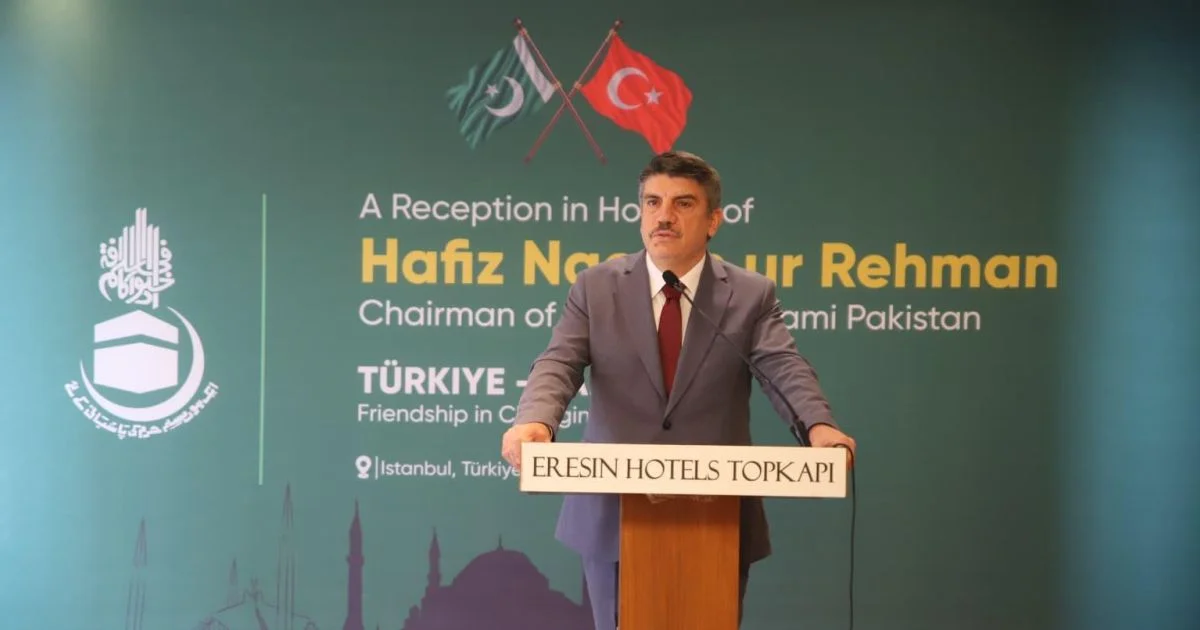
On Palestine, he called for continued support through public awareness, humanitarian assistance, political and diplomatic efforts, prayers and effective collective boycotts. He also stressed the need to support Palestinian educational, medical and relief institutions.
Speaking about Pakistan-Turkiye relations, Hafiz Naeem said young people from both countries should expand practical cooperation in education, trade, technology, culture, humanitarian activities and the struggle for justice.
He said Turkish youth should use their country's historical heritage and strategic geographical position to promote cooperation and build connections between different regions while combining faith with modern knowledge and industrial development.
Envisioning the future of the Muslim world, the JI emir said it should be a society where no child went to bed hungry, economies were free from exploitation and dependence, universities served humanity, women had access to education and protection, governments remained accountable, Palestine was free, Kashmiris received justice and minorities lived in peace.
He concluded that building the future was a collective trust and responsibility, adding that sincere education, rejection of corruption, public service, support for the oppressed and every small effort towards unity could lay the foundation for major change.