JI Tells KP Governor Federal-Provincial Disputes Must Be Resolved Through Dialogue
KP Governor Faisal Karim Kundi visited Jamaat-e-Islami’s provincial headquarters, Al Markaz-ul-Islami, on Tuesday

Khyber Pakhtunkhwa Governor Faisal Karim Kundi visited Jamaat-e-Islami’s provincial headquarters, Al Markaz-ul-Islami, on Tuesday and held a meeting with the party’s provincial leadership to discuss the political situation, law and order and rising terrorism in the province.
JI Pakistan Vice Emir Professor Muhammad Ibrahim Khan briefed the governor on the party’s position, rejecting governor’s rule and the imposition of emergency measures in the province as unconstitutional and undemocratic. He called for the restoration of the elected provincial government through dialogue between the federal government and Pakistan Tehreek-e-Insaf (PTI).
The meeting was attended by JI northern KP Emir Inayatullah Khan, central KP Emir Abdul Wasi, Hazara Emir Abdul Razzaq Abbasi, central KP General Secretary Sabir Hussain Awan, and provincial deputy emirs Suhaibuddin Kakakhel and Haji Muhammad Aslam.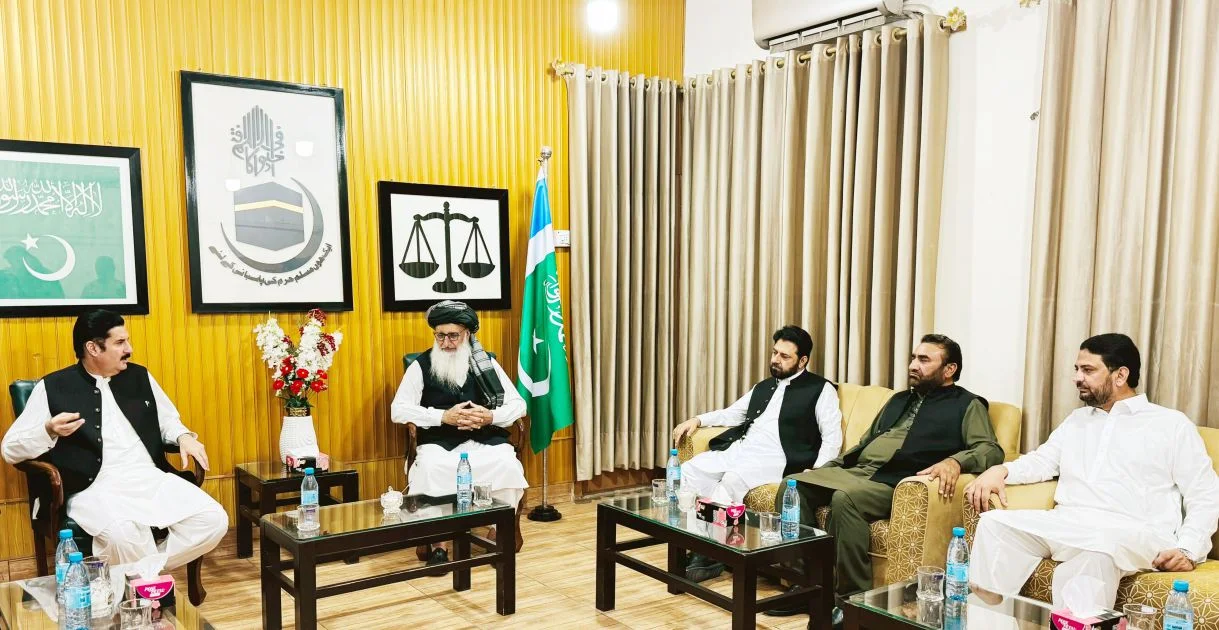
Professor Ibrahim said JI considered restoring peace, eliminating terrorism and protecting the lives and property of citizens essential priorities. However, he argued that the security situation did not justify suspending the elected provincial government and imposing emergency measures under Articles 232 and 234 of the Constitution.
He said maintaining law and order and combating terrorism were joint responsibilities of the federal and provincial governments. If the federal government had reservations about the provincial government’s performance, the differences should have been resolved through negotiations rather than extraordinary constitutional measures.
The JI leader said all political parties and stakeholders needed to be consulted to address the political crisis, restore peace and combat terrorism. He attributed the crisis partly to the rigid positions adopted by the federal government and PTI amid their ongoing political confrontation.
He said the resulting situation had undermined citizens’ fundamental rights and deprived the people of KP of their right to political representation. He called for an end to governor’s rule and emergency measures and the restoration of the elected provincial government, urging both sides to demonstrate seriousness and flexibility.
Inayatullah Khan said two different administrative arrangements were operating in the province, with emergency measures in 12 districts and governor’s rule elsewhere. He argued that this had fractured the province’s constitutional and administrative unity.
He said JI considered the former tribal districts merged into KP an integral constitutional part of the province and would oppose any unconstitutional move to divide its territorial unity against the wishes of the people.
Central KP Emir Abdul Wasay said JI opposed military operations that forced large numbers of people to leave their homes and destroyed their property, businesses and livelihoods.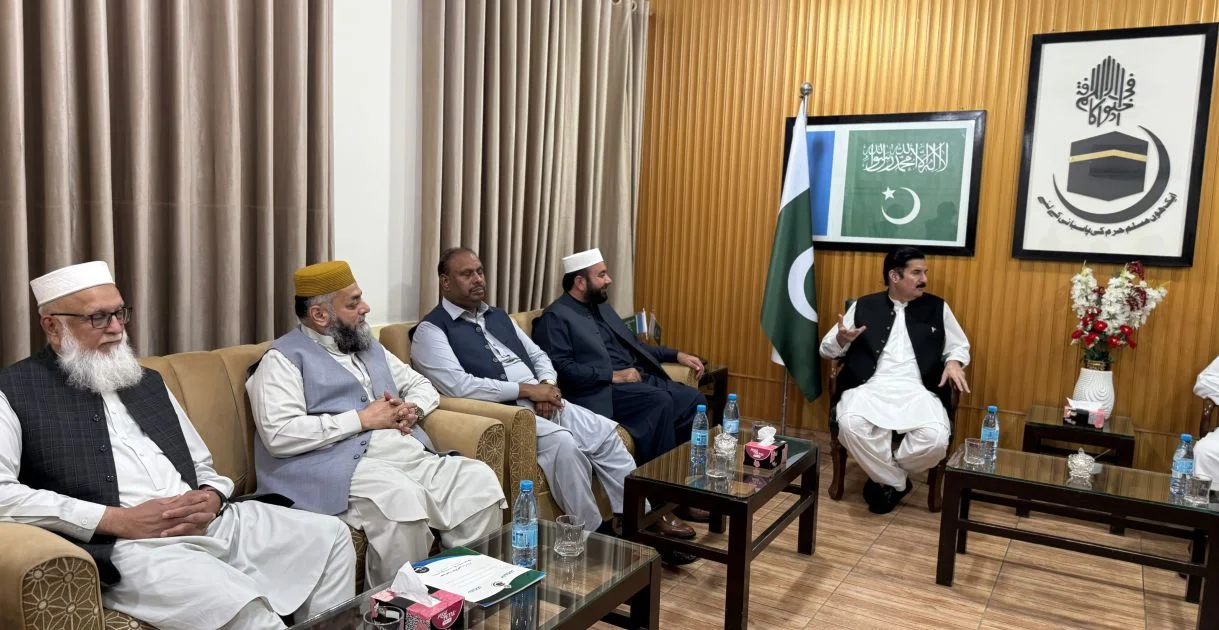
He said several military operations over the past 25 years had failed to eliminate terrorism while displacing millions of people and damaging local economies. According to him, the resulting losses had also widened the trust deficit between the public and the military.
Wasay called for the disclosure of the findings and facts surrounding previous operations, asking why terrorism had persisted despite the heavy human and financial costs.
He said the military should concentrate on securing the country’s borders and withdraw from civilian affairs and internal security responsibilities. He also linked the persistence of terrorism in KP to the continuation of policies introduced under former military ruler Pervez Musharraf, which, he said, had involved the military in civilian matters and internal security.
JI reiterated that political dialogue, constitutional governance and a coordinated approach involving all stakeholders were necessary to address the province’s security challenges and political instability.