JI chief warns of anti-govt movement if levy not scrapped
Addressing a women’s rally at Aabpara Chowk in the federal capital

ISLAMABAD, Sept 12: Jamaat-e-Islami Pakistan Emir Hafiz Naeem ur Rehman on Saturday warned the government that JI would turn its ongoing protest movement into a campaign to oust the government if the petroleum levy was not abolished.
Addressing a women’s rally at Aabpara Chowk in the federal capital, he rejected the petroleum levy as an unfair tax imposed on the people and demanded its immediate withdrawal. He also reiterated the call for a nationwide march on Islamabad on September 20.
Acting Secretary General of the JI Women Wing Samina Saeed, Islamabad Women Wing chief Qudsia Namus, JI Islamabad Emir Nasrullah Randhawa and Secretary Zubair Safdar also addressed the rally. JI Information Secretary Shakil Ahmed Turabi and other male and female leaders were also present.
“The people cannot accept this bhatta (extortion) tax,” Rehman said, urging the rulers to cut their own lavish spending instead of burdening citizens with additional taxes. He called for an end to official luxuries, expensive vehicles, free fuel and free electricity. 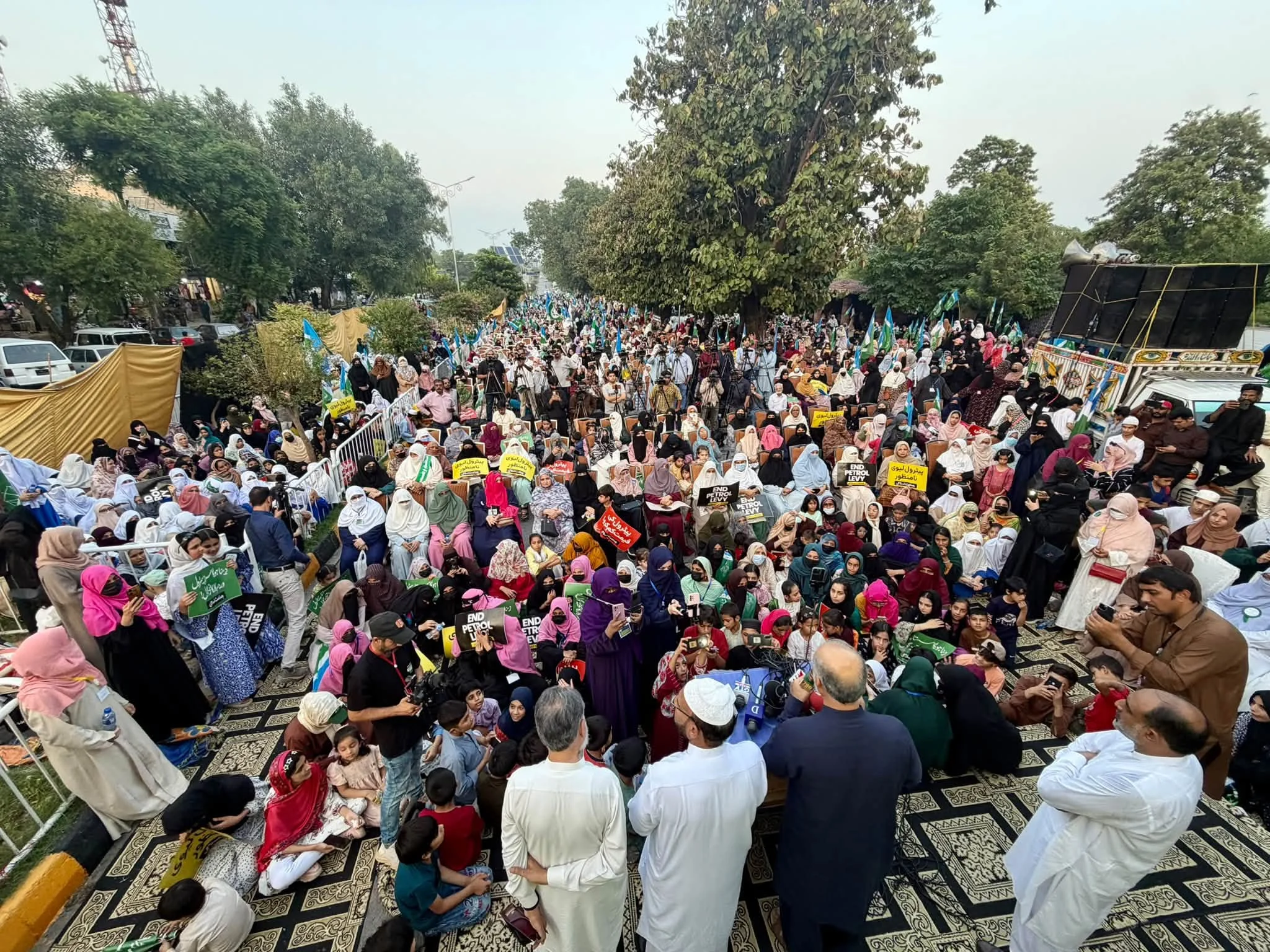
“The nation wants the right to live, not charity. People should be given their constitutional rights,” he said.
The JI Emir said persistent inflation and rising petrol and electricity prices had made life increasingly difficult for ordinary citizens. Even middle-class families were struggling to meet their expenses, while poor households found it difficult to arrange two meals a day.
He demanded a reduction in petrol prices and the immediate abolition of the petroleum levy, saying women were among those hit hardest by inflation. He said women were being forced to choose between their children’s school fees, electricity bills, groceries and other household expenses.
The JI emir said the government increased petrol prices whenever international oil prices rose but failed to provide comparable relief when prices fell in the global market, while continuing to collect the levy. 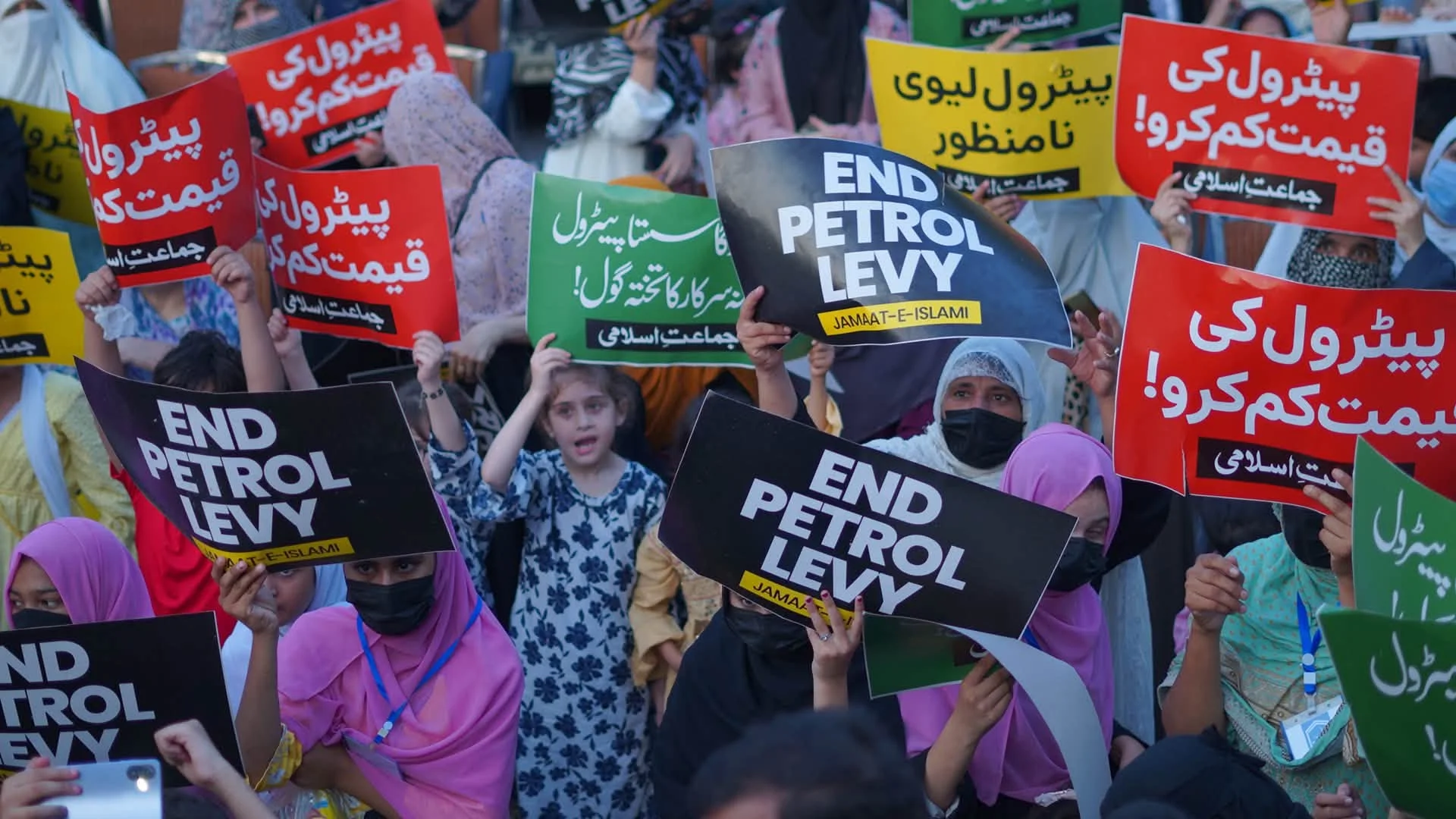
He said citizens were paying taxes on petrol, electricity, food, mobile phone cards and other basic necessities, while the elite enjoyed exemptions and privileges. At the same time, he said, government expenditures and the rulers’ lavish lifestyles remained unchecked, while education, health and agriculture had suffered.
Referring to educational standards in Punjab, Rehman said a large number of boys and girls had failed their ninth-grade examinations. He said it was the state’s responsibility to provide quality and equal education to every child. He also questioned the sale of government schools, asking how Maryam Nawaz could sell schools built with public money.
He said women and daily-wage workers were bearing the brunt of rising petrol prices. Many men, he added, had been forced to work two jobs to meet household expenses, while millions of daily-wage workers lacked basic employment rights.
The JI leader said that if petrol was being sold at Rs386 per litre, more than Rs130 of the price consisted of taxes. He questioned why the government was increasing the burden on ordinary people instead of reducing expenses on official vehicles and other privileges.
He also criticised the government for repeatedly citing the International Monetary Fund as a reason for retaining the petroleum levy. “Do the rulers seek the IMF’s permission before using their aircraft, expensive vehicles and other luxuries?” he asked. He said that if the IMF demanded taxes on landlords and the wealthy, the government should implement those measures as well. 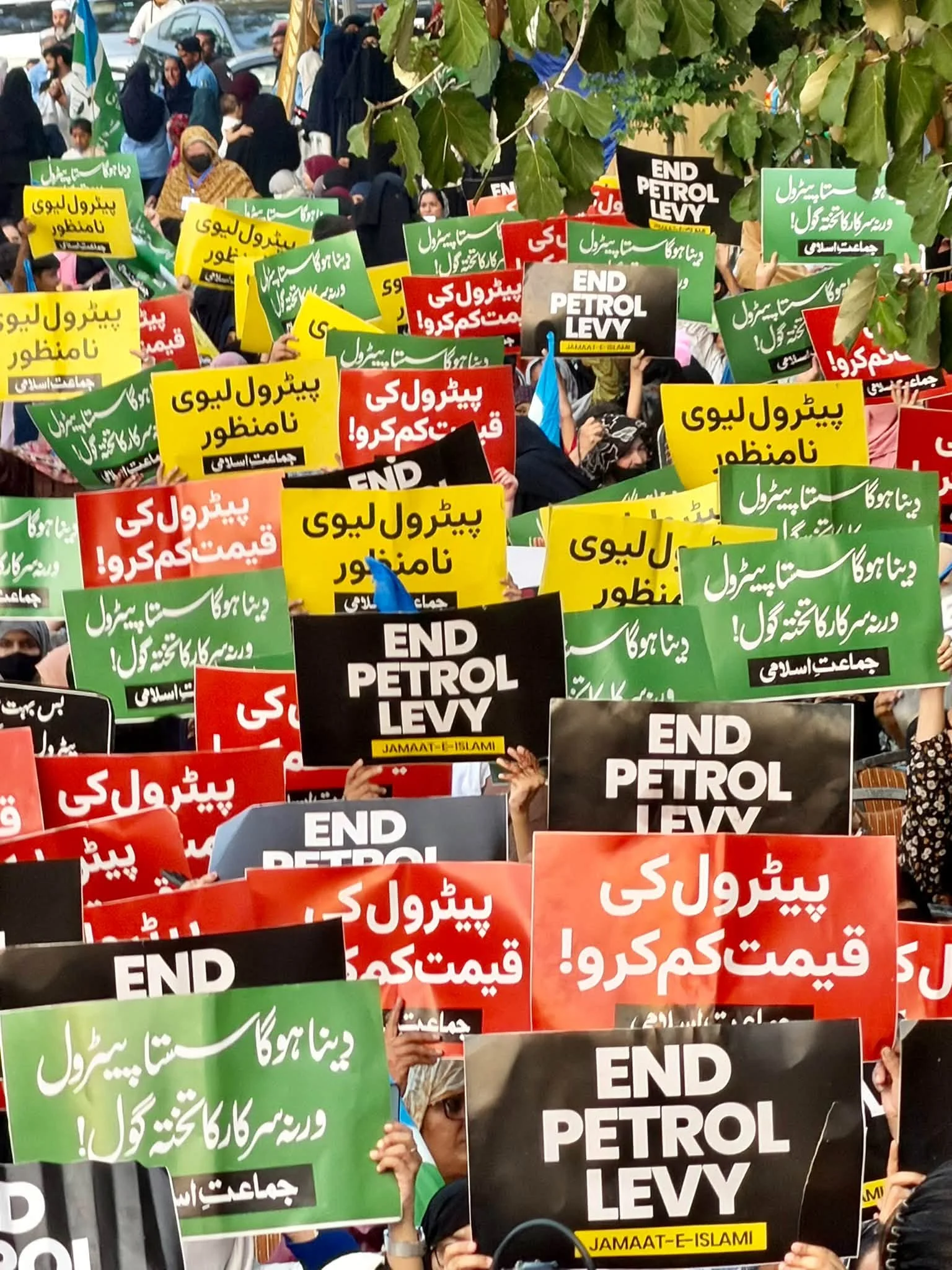
Rehman said the JI’s nationwide sit-in campaign would continue, with protests being held at 35 to 40 locations across the country. He said a historic march on Islamabad would be held on September 20, with people from across Pakistan expected to participate.
He said the government had started placing containers to restrict the march but maintained that the JI would remain peaceful and exercise its democratic right to enter Islamabad from different directions.
Rehman praised women participating in the protests across the country, saying the movement had become the voice of the people rather than that of the JI alone.