'Ball in govt court': Abolish petroleum levy or brace for long march, Hafiz Naeem tells Islamabad
Women convention at sit-in demands rulers to mend ways

Jamaat-e-Islami Pakistan Ameer Engr Hafiz Naeemur Rehman on Wednesday said the ball is in the government court as Islamabad will have to either abolish the petroleum levy and unjust taxes or brace for the long march to the capital.
Hafiz Naeemur Rehman said this while addressing a women convention at the sit-in venue. A large number of women from all walks in life participated in the event from across the mega city.
On the occasion, he announced that women’s rallies would be held in Gujranwala on September 11 and in Islamabad on September 12.
He made it clear that petroleum levy and other taxes had “nothing to do with the global or local market” and were instead a result of government “incompetence, lavish spending and economic policies.”
He further said that while JI was not against new administrative units and provinces under constitutional procedure, the “Form 47 government” should not try to set the nation against each other.
On education and health, he said over 90 per cent of people were not getting quality education and there was no hospital in Sindh that could be called a proper tertiary care hospital. Citing the Mir Raza case, he said it showed how “rotten and obsolete” the police system in Sindh was.
Addressing a press conference at Idara Noor-e-Haq on the 25th day of JI’s sit-in outside Governor House, he warned that if the government’s negotiating team did not announce clear relief for the public in a meeting scheduled for September 10, JI would announce a long march toward Islamabad.
“Reducing the policy rate by just one per cent will save the national exchequer Rs594 billion,” he said, adding that the government had collected Rs1,567 billion in petroleum levy over the past year. 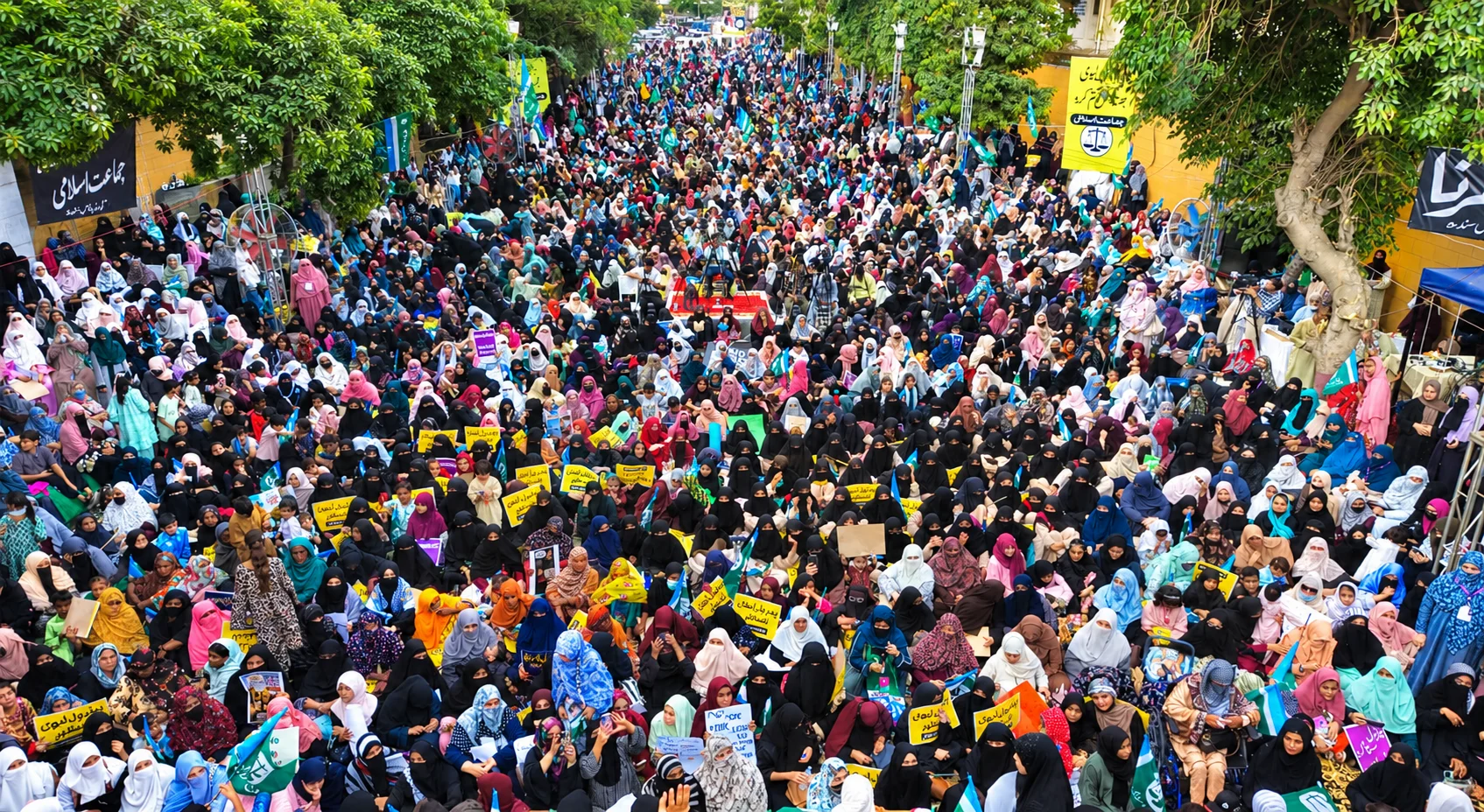
“JI’s sit-ins are ongoing in 32 cities across the country. Our objective is not party or personal interest, but only public interest. We will not back down from our stance and the people’s right,” he said.
Earlier in the day while addressing a press conference, Hafiz Naeem urged opposition parties to “set aside all differences” and become part of JI’s movement so that the public could get relief.
“PTI Chairman Barrister Gohar has assured cooperation, and we will also consult other opposition parties,” he said.
He welcomed the Sindh Assembly’s approval of a resolution against the petroleum levy moved by JI MPA Muhammad Farooq, and called on the Sindh government to forward the resolution to the federation in the interest of the people. “We will also contact the PPP in this regard and ask them to play their role,” he said.
Criticising the IPPs as a “complete mafia and cartel,” he said that according to recent reports, while energy costs were low, capacity payments were high. “In other words, Rs1,700-1,800 billion has been paid to IPPs without producing electricity,” he said.
He proposed that the government gradually reduce the interest rate, increase the cash reserve ratio for banks, impose higher taxes on luxury vehicles, promote electric vehicles, and audit gymkhanas and clubs “where the fate of the nation is decided.” He also said FBR was facing corruption of Rs1,300 billion and that tax exemptions for sugar and flour mafias should end.
JI Karachi chief Monem Zafar, addressing the women’s gathering, said the petroleum levy was affecting students, farmers, labourers and women. “In one litre of petrol, Rs130 including Rs85 levy and other taxes are being collected. Due to the Sindh government’s incompetence, 35 million people of Karachi are facing problems,” he said.
JI Sindh Women’s Wing Nazima Rukhsana Munib, JI Karachi Women’s Wing Nazima Jawidan Fahim, former Sindh High Court Bar vice president Shazia Advocate, PIMA President Dr Shamaila, Dr Zainab Nisar Chandna, journalist Asifa Kamal and others. Women, including elderly women and children, participated with banners and placards.
Rukhsana Munib said it was the 25th day of the sit-in that began on August 16, and women had come out in large numbers to prove they were “no less than anyone.” She cited Rs130 in taxes per litre of petrol and said it had become difficult for people to live and buy basic items.