Minar-e-Pakistan rally to change Punjab’s political landscape: JI Emir
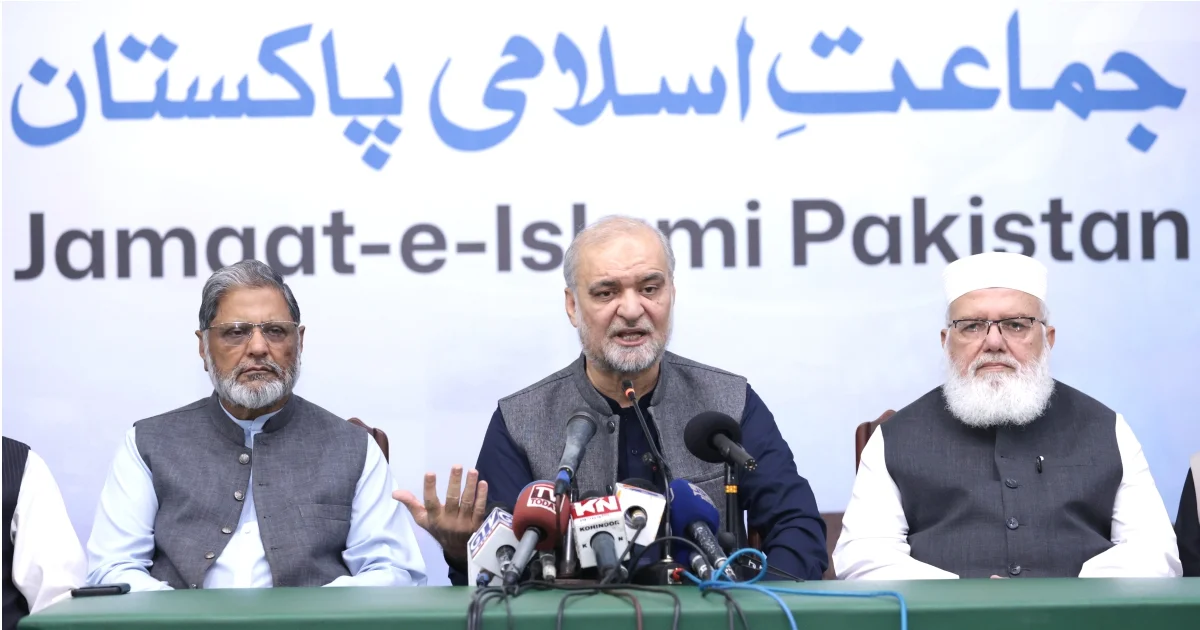
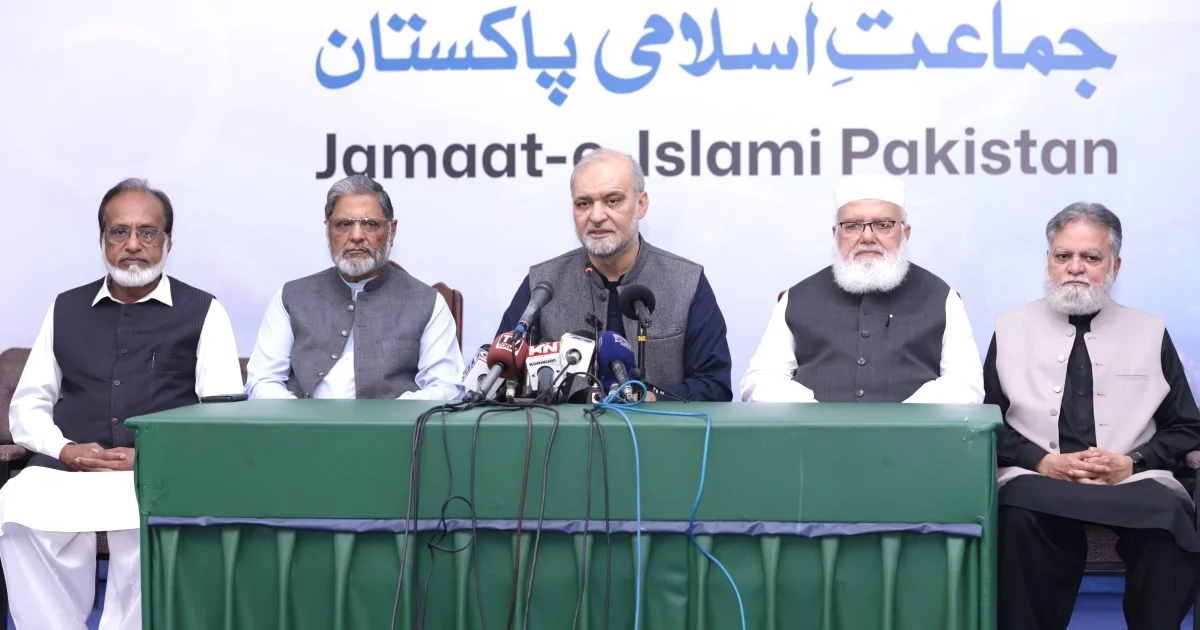
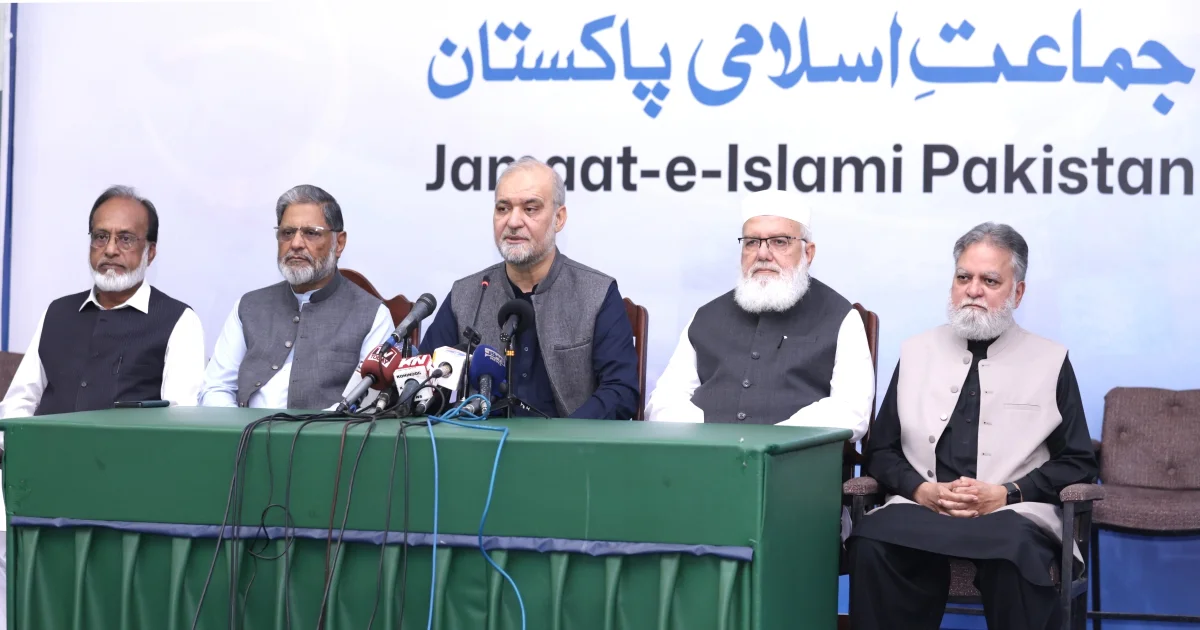
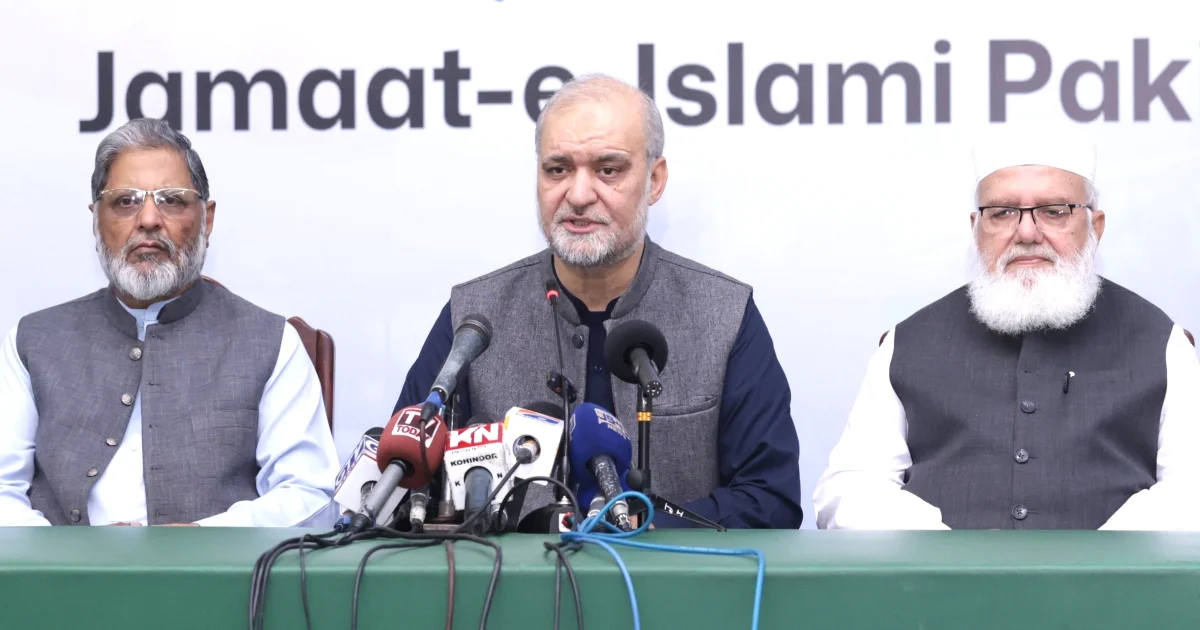
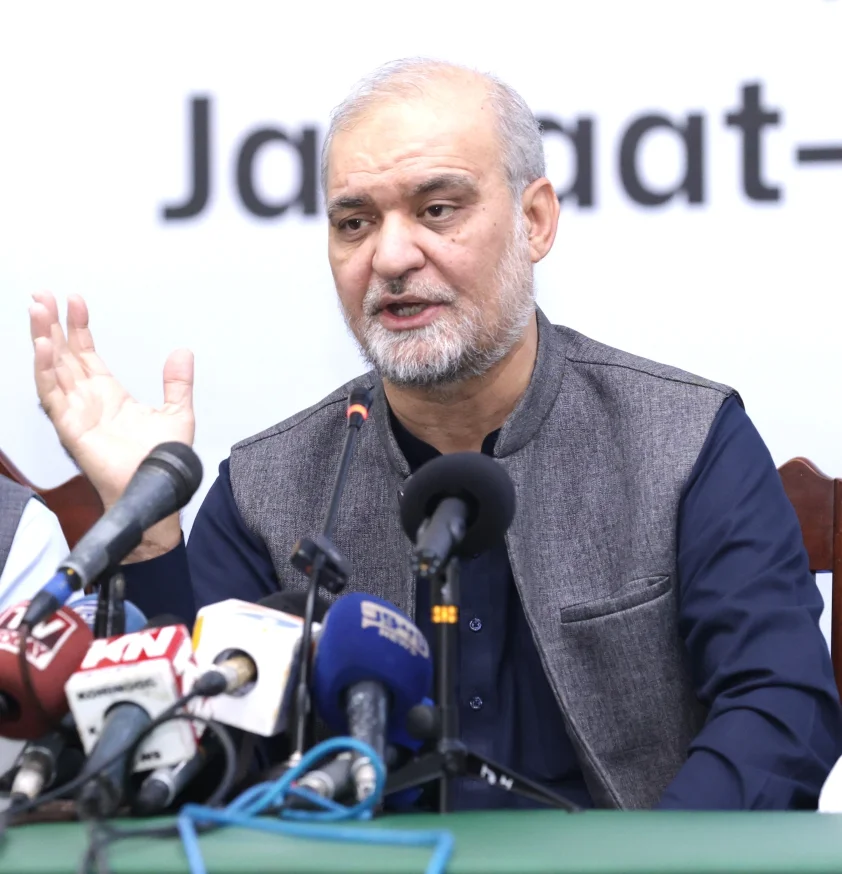
Hafiz Naeem ur Rehman addressing a press conference at Mansoorah on Tuesday

Lahore, Nov 17: Jamaat-e-Islami Pakistan Emir Hafiz Naeem ur Rehman has said the JI’s public rally at Minar-e-Pakistan on November 29 will change the political landscape of Punjab, adding that JI will emerge as a major political force in the province.
Addressing a press conference at Mansoorah on Tuesday, he said the JI would hold its final round of talks with the government on the petroleum levy issue on Thursday (November 19). He warned that if the government failed to expand the scope of relief for the people, JI would launch a series of sit-ins following its public rallies across the country.
JI Vice Emir Liaqat Baloch, acting Secretary General Nazir Ahmad Janjua, Deputy Secretary Azhar Iqbal Hasan and Information Secretary Shakil Ahmed Turabi were also present.
Rehman said inflation had made life increasingly difficult for ordinary citizens, with even flour becoming unaffordable. He pointed out that the government had purchased wheat from farmers at Rs3,500 per maund but it was now being sold in the market at Rs5,500 per maund. He said the government was supplying substandard wheat to flour mills.
The JI leader criticised the federal and provincial governments’ agricultural policies, saying the Maryam Nawaz administration had pushed the farming sector into crisis. The area under cotton cultivation had declined by 60 per cent, while agricultural land was being converted into residential colonies, he said. He added that sugar mills had yet to begin crushing sugarcane, leaving growers worried about their crops and payments.
The JI chief also highlighted the disparity between official and market prices of liquefied petroleum gas (LPG), saying the government-set rate was Rs290 per kilogram but it was being sold for as much as Rs550. Gas loadshedding continued despite the high prices, he added.
He expressed concern over the deteriorating law and order situation in Balochistan and Khyber Pakhtunkhwa, rising street crime in Karachi and the influence of land-grabbing mafias in Sindh.
He said JI was the only political party consistently raising these public issues and announced a series of rallies under its public rights campaign: November 22 in Quetta, November 29 at Minar-e-Pakistan in Lahore, December 12 in Peshawar and December 20 in Karachi.
Regarding negotiations over the petroleum levy, Rehman said the JI committee, headed by Liaqat Baloch, would hold its final round of talks with the government team on Thursday. He said the JI had forced the government to reconsider repeated increases in petroleum prices through sustained public pressure, despite the regional conflict being used as a pretext for passing on excessive price hikes.
He said JI had also raised the issue of excessive profits earned by oil refineries and demanded a gradual elimination of the petroleum levy by the next budget. The government would not be allowed to evade its responsibility to provide relief by citing pressure from the IMF or making other excuses, he warned. He also called for the termination of unjust agreements with IPPs.
Referring to a letter written by PTI founder Imran Khan from prison, the JI Emir expressed concern over the former prime minister's health and demanded that the government ensure all necessary facilities for him and his wife.
Responding to questions, Rehman said that the PDM was effectively in power across all four provinces, Gilgit-Baltistan and Azad Jammu and Kashmir through a particular political arrangement. He said neither Maryam Nawaz's departure nor the appointment of Malik Ahmad Khan in her place would make any difference to the prevailing situation. JI, he said, stood for strengthening democracy, empowering the people and ensuring transparent elections through proportional representation. The party's struggle was against mafias operating within both ruling and opposition political parties, he added, stressing that its politics was focused on people's rights rather than slogans of political allegiance.
Clarifying the JI position on the creation of new administrative units, he said JI was not opposed to the idea in principle but insisted that public opinion must be respected. The Constitution provided mechanisms such as referendums or resolutions passed by a two-thirds majority in provincial assemblies for the purpose, he added. However, he questioned why Pakistan still lacked an empowered local government system, arguing that strengthening grassroots democracy should be addressed before debating the creation of new administrative units.