Hafiz Naeem ur Rehman announces Islamabad march on September 20
Addressing a public gathering in Gujranwala

Jamaat-e-Islami Pakistan Emir Hafiz Naeem ur Rehman on Friday announced that JI would hold a march towards Islamabad on September 20 against the petroleum levy, warning the government that the decisive phase of the protest would unfold on the streets of the federal capital if the levy was not withdrawn before the march began.
Addressing a public gathering in Gujranwala, Rehman said caravans from across the country would converge on Islamabad and warned the “Form-47 rulers” to read the writing on the wall and provide immediate relief to the people.
“If the petroleum levy is not abolished before the long march begins, the decision will be made on the roads of Islamabad,” he said, adding that failure to meet public demands would force the JI to launch a movement to bring down the government.
The gathering was also addressed by JI Central Punjab Emir Javed Qasuri, Gujranwala Emir Mazhar Randhawa and other party leaders. Leaders of the JI Women Wing also attended the event.
The JI’s sit-ins against the petroleum levy in Lahore, Peshawar, Karachi and dozens of other locations across the country entered their 27th day on Friday.
Hafiz Naeem ur Rehman also announced that he would address a women’s public gathering in Islamabad on Saturday and said the ongoing sit-ins would be expanded further.
Earlier, he chaired a meeting of the JI leadership from across the country at Mansoorah in Lahore, where the party discussed the next phase of its protest movement.
Speaking in Gujranwala, Rehman said the JI had emerged as a source of hope for the people and added that rulers who had deprived the country of its rights for 79 years had now realised the party’s growing strength.
He criticised the dominance of bureaucracy, feudal landlords and influential families over the country and said the working class was suffering while children were being forced into labour and deprived of education.
Addressing the Sharif family, which has ruled Punjab for decades, he asked how much workers in their factories were being paid.
The JI leader also criticised the provincial government over cases of violence and exploitation against women, saying around 6,500 such cases had been registered in Punjab but convictions had been secured in only a few cases.
He challenged Maryam Nawaz to provide the Federal Board of Revenue with a complete account of her income and expenditure after her recent remarks about travelling to London on a government aircraft at her own expense.
He said that the Sharif and Zardari families were among those responsible the exploitation of poor people and added that more than 40 percent of Punjab’s population was living in poverty. 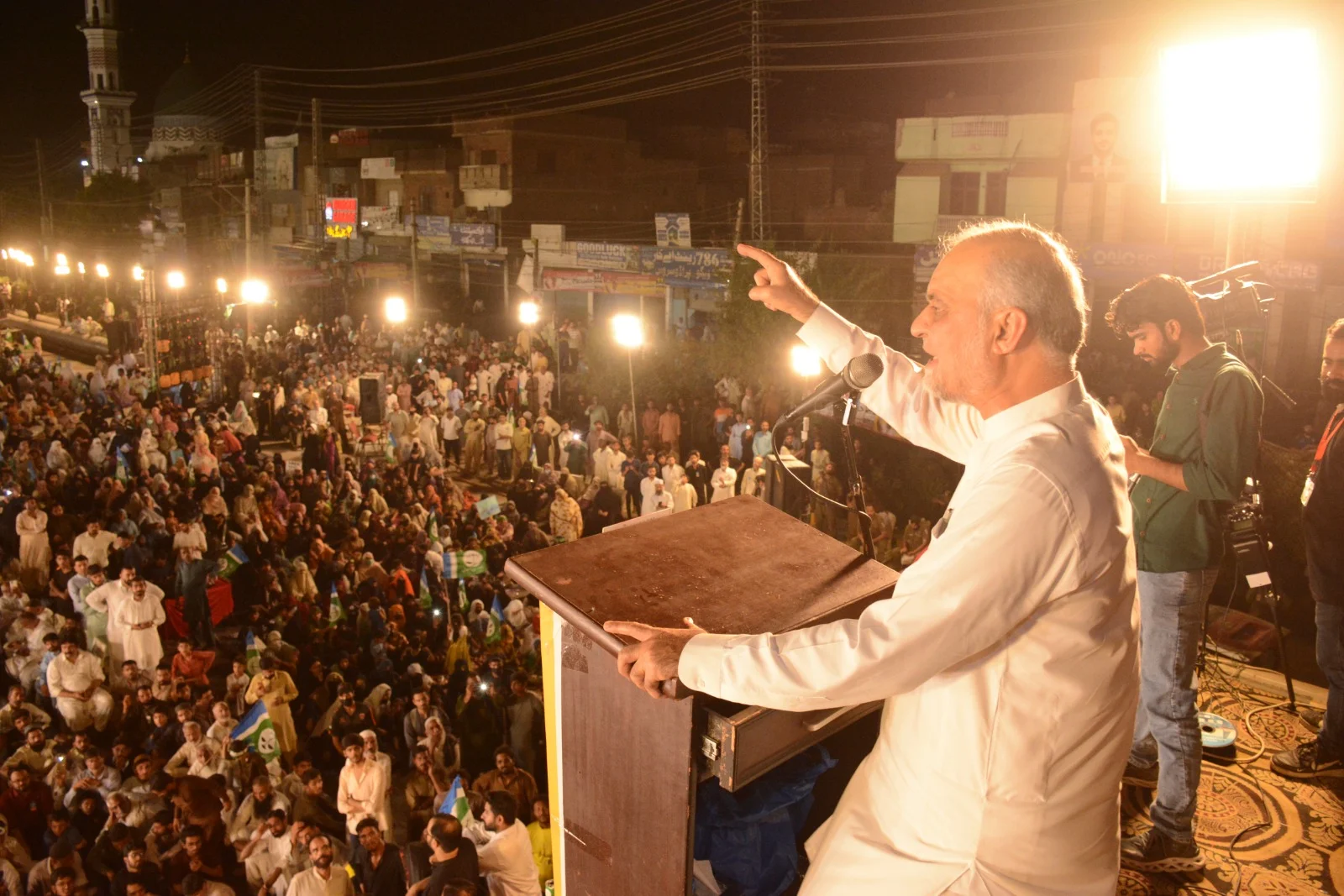
The JI chief also criticised the government over petroleum levy collections, saying that Rs1,567 billion had been collected from the public under the levy. He questioned why the government was imposing “jagga tax” on citizens while basic healthcare and education remained inaccessible to millions.
He said successive governments since the 1990s had benefited independent power producers (IPPs) while asking why rulers were collecting additional taxes from citizens instead of reducing their own expenditures.
Rehman also questioned the federal government’s continued budget allocations after the 18th Amendment transferred several powers and departments to the provinces. He called for an end to interest-based financial practices, citing the Federal Shariat Court’s ruling, and said that even a partial reduction in interest payments could save the national exchequer thousands of billions of rupees.
He said the JI had raised these issues during talks with the government but added that the authorities had failed to provide satisfactory answers.
“If the rulers have no answers, the people will now demand answers from them,” he said.
The JI leader further criticised the education system in Punjab, saying that 52 percent of students in government schools had failed ninth-grade examinations. He said that thousands of schools were being handed over to private interests and warned that further schools were also being considered for such arrangements.
He also criticised the condition of basic health units and hospitals, saying the government was treating education and healthcare as commercial commodities.
The JI emir said the PML-N and PPP were depriving people of education, healthcare and employment.